LOADING ARTICLE
1%Fanzine Index
CC_INDEX_ESSAY : BLACK-METAL-AND-DEATH-METAL-IN-2026-THE-UNDERGROUND-HAS-NEVER-BEEN-STRONGER
FANZINE REPORTEST. 8 mins
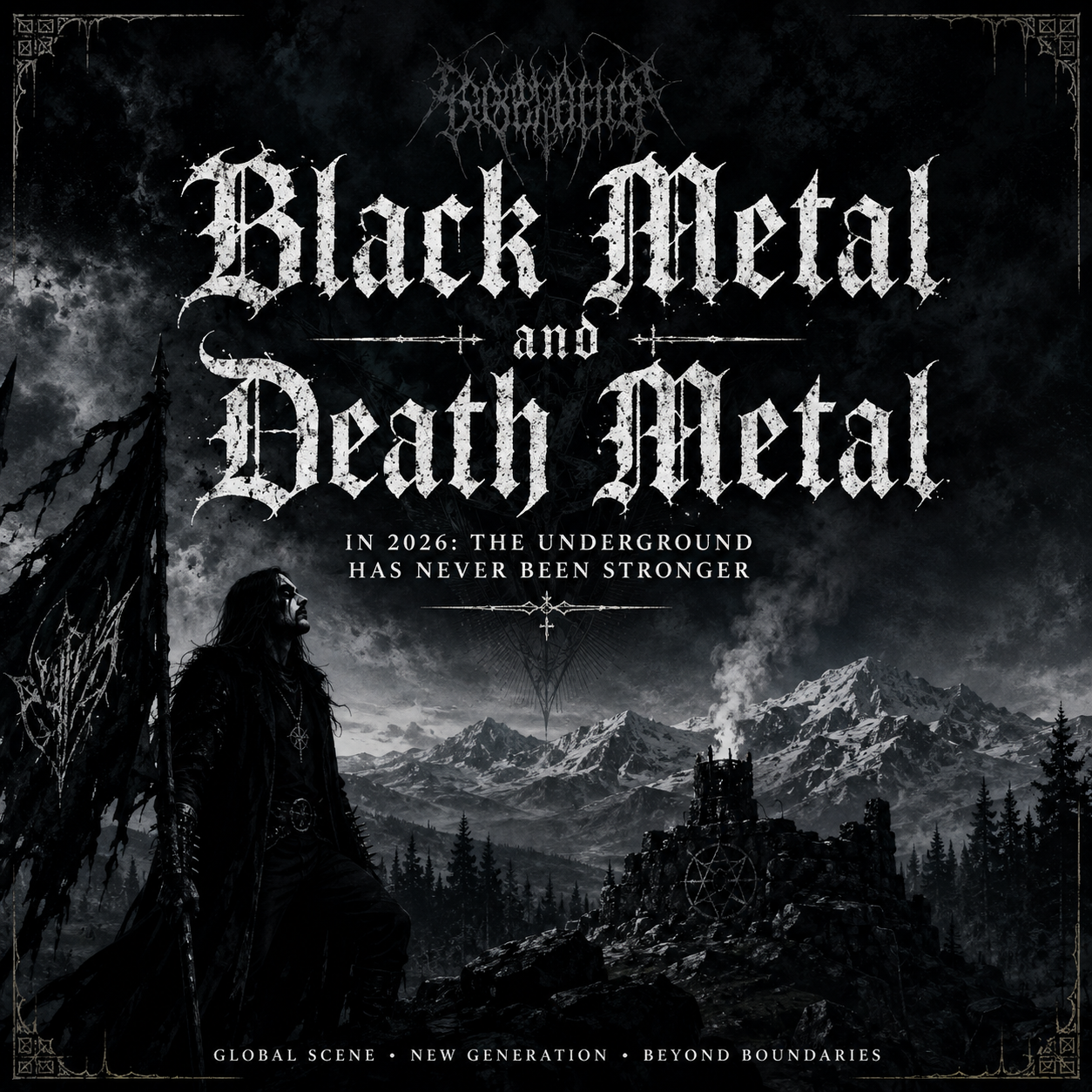
Black Metal and Death Metal in 2026: The Underground Has Never Been Stronger
// WRITTEN AND CATALOGUED BY AUTHOR HAFIZZAN SHAHHafizzan ShahPublished August 5, 2026
CATAPULT_CONSPIRACY // REPORT_LOGINDEX: black-metal-and-death-metal-in-2026-the-underground-has-never-been-stronger
Black Metal and Death Metal in 2026: The Underground Has Never Been Stronger
For decades, black metal and death metal have existed outside the boundaries of mainstream music. While commercial success has never been their primary goal, both genres continue to evolve, attracting new generations of listeners without sacrificing their underground identity. In 2026, the global extreme metal scene is arguably more diverse, creative, and connected than ever before.
A Global Scene Beyond Scandinavia and Florida
Black metal may have been born in the shadows of Norway, while death metal found its earliest identity in Florida and Sweden, but today's scene is truly international.
Countries such as Poland, Finland, Iceland, Brazil, Indonesia, Chile, Mexico, Japan, Australia, and Ukraine have become major contributors to modern extreme metal. New bands from South America and Southeast Asia are gaining international recognition through streaming platforms, independent labels, and social media, proving that geographical boundaries matter less than ever before. Recent release calendars also show a steady stream of black and death metal albums emerging from regions that were once overlooked by the global metal community.
Tradition Meets Innovation
One of the most exciting aspects of today's extreme metal landscape is the balance between tradition and experimentation.
Many bands continue to embrace the raw production, tremolo-picked guitars, and icy atmosphere that defined second-wave black metal. Others blend these elements with ambient music, folk traditions, post-rock, electronic textures, or even jazz influences.
Death metal has experienced a similar evolution. While old-school death metal remains popular, technical death metal, progressive death metal, blackened death metal, and cavernous death metal continue to push musical boundaries. Modern production techniques allow artists to create heavier and more immersive records without losing the aggression that defines the genre.
The Festival Culture Remains Strong
Despite the rise of digital music consumption, live performances remain the heart of extreme metal culture.
Major festivals such as Wacken Open Air continue to attract tens of thousands of fans from around the world, bringing together legendary acts and emerging underground bands on the same stages. Events like these demonstrate that metal remains one of the strongest live music communities globally, where fans value authenticity, musicianship, and shared experiences above commercial trends.
Streaming Without Losing Identity
Streaming services have fundamentally changed how listeners discover music.
Unlike previous decades, fans no longer depend solely on record stores or tape trading. Today, a listener can discover an underground black metal project from Indonesia or a brutal death metal band from Lithuania within minutes.
However, many artists continue to support physical releases through vinyl, cassette tapes, and limited CD editions. For extreme metal fans, collecting physical media remains an important part of the culture, preserving the artwork, atmosphere, and exclusivity that digital platforms cannot fully replicate.
A Younger Generation Enters the Underground
Contrary to the stereotype that extreme metal appeals only to older audiences, younger listeners continue to discover black and death metal through streaming platforms, YouTube channels, Bandcamp, TikTok, and online communities.
Rather than replacing the old guard, this new generation is expanding the scene by forming new bands, launching independent labels, and creating underground festivals in countries that previously had limited exposure to extreme metal. Community discussions and recent industry reporting suggest that post-pandemic years have also seen a noticeable increase in underground releases and renewed interest in extreme metal.
Beyond the Stereotypes
Black metal has often been associated with controversy because of events that occurred during the Norwegian scene of the early 1990s. While those events remain part of the genre's history, they do not define the entire global community.
Modern black metal includes artists exploring philosophy, nature, mythology, environmental themes, spirituality, depression, history, and personal reflection. Likewise, death metal has expanded beyond horror and gore to address politics, existentialism, science fiction, psychology, and social issues.
The diversity of lyrical themes reflects a broader evolution within extreme metal, where artistic expression continues to outweigh simplistic stereotypes.
The Future of Extreme Metal
Black metal and death metal have survived changing musical trends for more than forty years because they have never relied on mainstream popularity. Instead, they thrive through passionate communities, independent labels, dedicated musicians, and loyal fans.
As technology makes global collaboration easier than ever, the future of extreme metal looks increasingly international. Bands from every continent are contributing fresh ideas while respecting the foundations laid by pioneers of the genre.
Extreme metal may never dominate popular radio or streaming charts, but it continues to prove that artistic freedom, authenticity, and uncompromising creativity remain timeless values. In 2026, black metal and death metal are not merely surviving—they are entering another creative renaissance, driven by a worldwide underground that shows no signs of slowing down.
TRANSMIT TO EXTERNAL COMMUNESPropagate this report across autonomous terminals