
LOADING ARTICLE
1%Fanzine Index
CC_INDEX_ESSAY : GROOVE-METAL-THE-EVOLUTION-OF-HEAVY-RIFFS-AND-RELENTLESS-POWER
FANZINE REPORTEST. 8 mins
Groove Metal: The Evolution of Heavy Riffs and Relentless Power
// WRITTEN AND CATALOGUED BY AUTHOR HAFIZZAN SHAHHafizzan ShahPublished August 5, 2026
CATAPULT_CONSPIRACY // REPORT_LOGINDEX: groove-metal-the-evolution-of-heavy-riffs-and-relentless-power
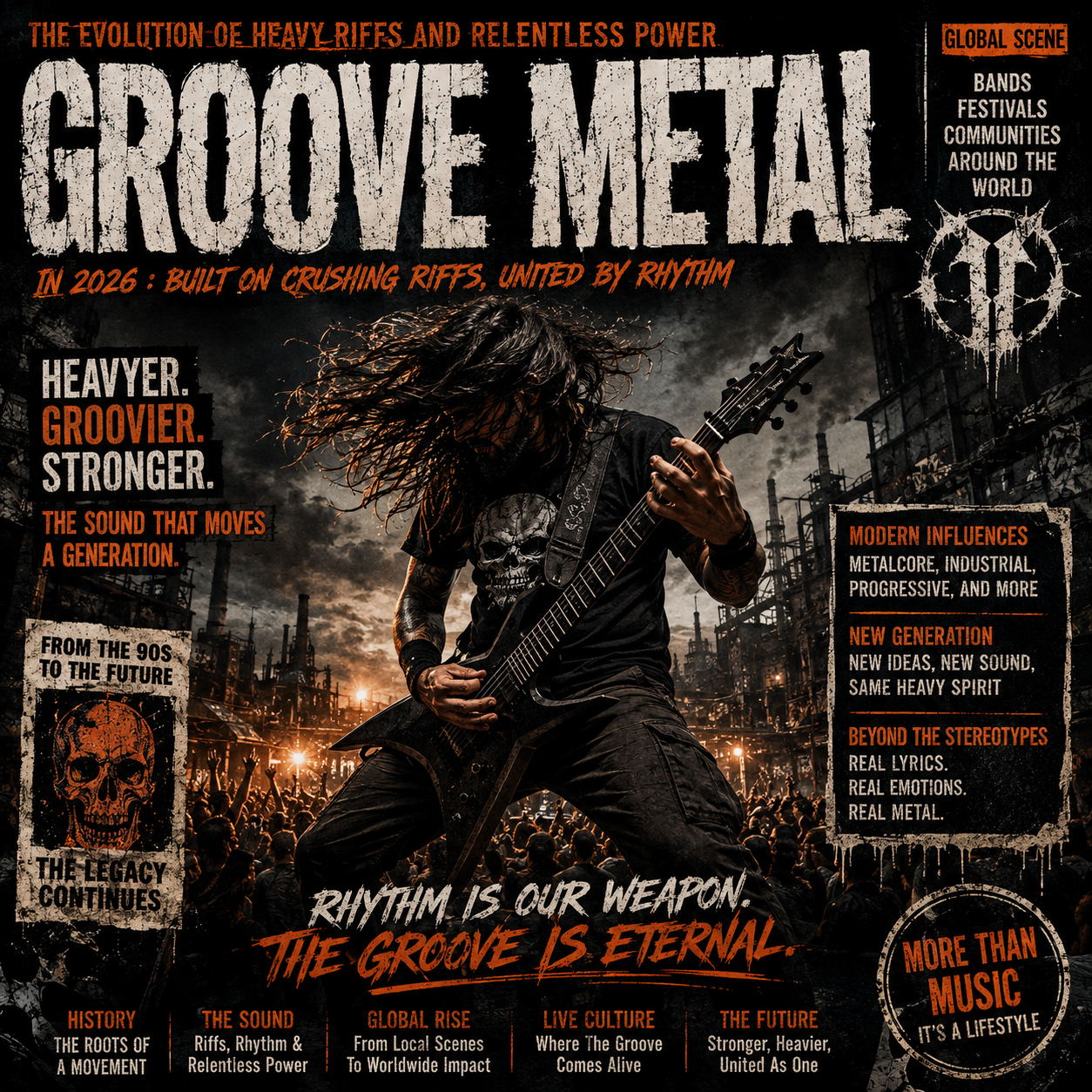
Groove Metal in 2026: The Evolution of Heavy Riffs and Relentless Power
Among the many branches of heavy metal, groove metal has earned a unique place through its crushing riffs, rhythmic precision, and undeniable energy. Unlike genres that rely primarily on speed or technical complexity, groove metal is built around powerful rhythms that compel listeners to move while maintaining an unmistakably aggressive edge.
More than three decades after its emergence, groove metal continues to evolve, influencing countless modern bands and remaining one of the most respected styles in the global metal community.
The Birth of Groove Metal
Groove metal emerged during the late 1980s and early 1990s as a reaction to the rapidly increasing speed of thrash metal. Rather than focusing solely on velocity, musicians began emphasizing heavier guitar riffs, syncopated rhythms, and mid-tempo grooves that delivered maximum impact.
The genre combined the aggression of thrash metal with slower, more crushing riffs and an intense rhythmic foundation. This formula created music that was both brutally heavy and highly memorable, allowing audiences to headbang to every riff instead of simply keeping up with relentless speed.
Groove became the defining element, transforming heaviness into something physical as well as musical.
The Signature Sound
Groove metal is instantly recognizable through its emphasis on rhythm.
Down-tuned guitars, palm-muted riffs, thunderous bass lines, aggressive drumming, and commanding vocal performances form the backbone of the genre. While guitar solos remain important, they often serve the song rather than dominate it.
The music frequently alternates between crushing breakdowns, tightly synchronized riffs, and explosive choruses, creating a dynamic listening experience that balances intensity with accessibility.
This rhythmic approach has also made groove metal one of the most influential genres in modern heavy music.
A Worldwide Movement
Although groove metal was initially shaped in the United States, the genre has become a truly global phenomenon.
Today, thriving groove metal scenes exist throughout Europe, South America, Asia, Australia, and the Middle East. Countries such as Brazil, Germany, Poland, France, Sweden, Indonesia, India, Mexico, and Australia continue to produce bands that blend classic groove metal foundations with local influences and modern production techniques.
The global reach of streaming services has allowed emerging artists to connect with audiences far beyond their home countries, creating an increasingly diverse international community.
Modern Influences and Innovation
One reason groove metal remains relevant is its ability to adapt.
Many contemporary bands incorporate elements from metalcore, melodic death metal, industrial metal, progressive metal, and even hardcore punk while maintaining the rhythmic identity that defines groove metal.
Seven-string and eight-string guitars have expanded the sonic possibilities of the genre, allowing musicians to create deeper, heavier riffs without sacrificing clarity.
Advanced recording technology has also contributed to the genre's evolution, enabling producers to achieve massive guitar tones, powerful drum sounds, and polished mixes that still preserve the raw energy of live performances.
The Importance of Live Performance
Groove metal has always been designed for the stage.
The genre's emphasis on rhythm naturally encourages audience participation through headbanging, circle pits, synchronized chants, and energetic live performances. Whether performed in intimate clubs or massive festival stages, groove metal consistently creates an atmosphere of collective energy between musicians and fans.
This live experience continues to be one of the genre's greatest strengths, proving that heavy music remains as much about community as it is about sound.
A New Generation of Musicians
A younger generation of guitarists and producers has embraced groove metal by combining traditional riff writing with modern songwriting techniques.
Many independent musicians now create professional-quality recordings from home studios, sharing their music through digital platforms while remaining completely independent from major record labels.
Social media has also become an important tool for showcasing guitar performances, drum playthroughs, production tutorials, and songwriting techniques, helping new audiences appreciate the craftsmanship behind groove metal.
Beyond the Stereotypes
Groove metal is often associated with aggression, but its lyrical themes are remarkably diverse.
Modern artists explore personal struggles, mental resilience, social injustice, environmental concerns, political criticism, war, self-discipline, and philosophical reflection. These themes resonate with listeners because they combine emotional honesty with the genre's characteristic musical intensity.
Rather than relying solely on anger, many contemporary groove metal bands focus on empowerment, perseverance, and confronting adversity.
Technology Without Losing Authenticity
Digital production has transformed how groove metal is recorded, distributed, and promoted. Independent artists now have access to professional software that rivals traditional recording studios, making high-quality production more accessible than ever.
Despite these technological advances, authenticity remains one of the genre's core values. Fans continue to appreciate organic performances, real musicianship, and powerful songwriting over excessive digital perfection.
Vinyl records, limited-edition CDs, and collectible merchandise also remain highly valued, demonstrating that physical media still plays an important role within the groove metal community.
The Future of Groove Metal
As heavy music continues to evolve, groove metal stands at the intersection of tradition and innovation.
Its rhythmic foundation has influenced countless modern metal subgenres while continuing to inspire new musicians around the world. Rather than fading into history, groove metal has become a blueprint for contemporary heavy music, proving that unforgettable riffs can be just as powerful as blistering speed.
With new bands emerging across every continent, stronger international collaboration, and an ever-growing online community, groove metal is entering another exciting chapter.
In 2026, groove metal remains one of heavy music's most enduring forces—built on crushing riffs, relentless grooves, and the timeless ability to unite audiences through the universal language of rhythm.
TRANSMIT TO EXTERNAL COMMUNESPropagate this report across autonomous terminals