LOADING ARTICLE
1%Fanzine Index
CC_INDEX_ESSAY : GRINDCORE-THE-LOUDEST-VOICE-OF-EXTREME-MUSIC
FANZINE REPORTEST. 8 mins
Grindcore: The Loudest Voice of Extreme Music
// WRITTEN AND CATALOGUED BY AUTHOR HAFIZZAN SHAHHafizzan ShahPublished August 5, 2026
CATAPULT_CONSPIRACY // REPORT_LOGINDEX: grindcore-the-loudest-voice-of-extreme-music
Grindcore in 2026: The Loudest Voice of Extreme Music
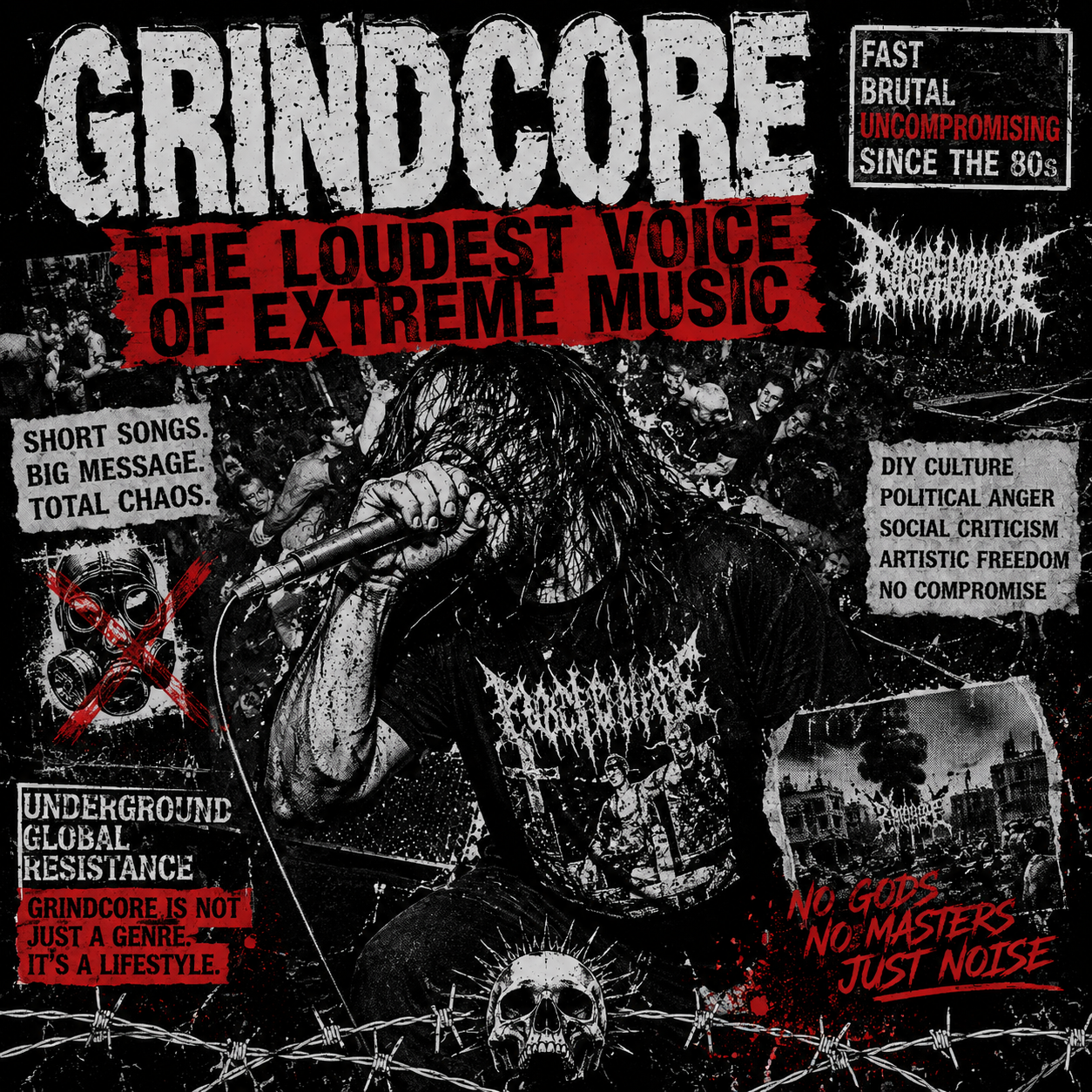
When people talk about the most extreme forms of heavy music, one genre inevitably rises above the rest—grindcore. Known for its blistering speed, chaotic songwriting, politically charged lyrics, and uncompromising attitude, grindcore remains one of the most intense expressions of underground music. More than four decades after its birth, the genre continues to evolve while staying true to its rebellious roots.
The Origins of Grindcore
Grindcore emerged during the mid-1980s in the United Kingdom as a collision between hardcore punk, crust punk, thrash metal, and extreme metal. Unlike traditional metal genres that focused on technical solos or melodic structures, grindcore embraced chaos, speed, and raw emotion.
Early pioneers rejected commercial music entirely, creating songs that were often less than a minute long. Blast beats became the genre's defining rhythm, while distorted guitars, heavily down-tuned riffs, and guttural or high-pitched screams completed the sonic assault.
Rather than seeking perfection, grindcore celebrated intensity and authenticity.
More Than Just Noise
To outsiders, grindcore may sound like pure chaos. However, longtime fans understand that beneath the relentless aggression lies careful songwriting and powerful messages.
Many grindcore bands use extremely short compositions to deliver direct statements about social injustice, war, environmental destruction, political corruption, consumerism, and inequality. Others explore themes of existential despair, psychological conflict, or dark humor.
Unlike many extreme genres, grindcore often prioritizes ideas over image. The music is designed to provoke thought as much as it is to overwhelm the listener.
A Global Underground Movement
Although grindcore began in Britain, today's scene stretches across every continent.
Countries including Japan, Indonesia, Brazil, Sweden, Finland, Germany, Mexico, Spain, Canada, and the United States have built thriving underground communities. Independent record labels continue to release hundreds of demos, EPs, and full-length albums each year, proving that the genre remains incredibly active despite receiving little mainstream attention.
The internet has helped countless independent bands reach international audiences without relying on major labels. Bandcamp, streaming platforms, and social media have become essential tools for promoting underground releases while maintaining complete artistic independence.
The Evolution of Sound
Modern grindcore is no longer limited to a single formula.
Some bands remain faithful to the raw aggression of the genre's earliest years, while others incorporate elements from death metal, black metal, sludge, doom, industrial music, jazz, noise, and even experimental electronic music.
Subgenres such as deathgrind, goregrind, cybergrind, noisegrind, and blackened grindcore have expanded the genre's creative possibilities without abandoning its fundamental philosophy.
This diversity has allowed grindcore to remain fresh despite its relatively simple musical foundations.
DIY Is Still the Heart of Grindcore
Perhaps no extreme metal genre embodies the DIY (Do It Yourself) spirit more than grindcore.
Many bands record their own music, produce their own merchandise, organize independent tours, and release albums through small underground labels or self-publishing platforms. This independence has allowed artists to remain free from commercial pressure while building loyal fan communities around the world.
Local venues, community spaces, underground festivals, and independent promoters continue to play an essential role in keeping the grindcore scene alive.
The Culture Beyond the Music
Grindcore has never been defined solely by its sound.
The genre encourages creative freedom, underground collaboration, and resistance against commercial trends. Album artwork often features disturbing imagery, surreal collages, or politically inspired designs that reflect the band's message rather than marketing strategies.
Many fans appreciate grindcore because it refuses to compromise. It remains one of the few genres where artistic integrity consistently outweighs commercial success.
Modern Technology, Underground Values
Streaming platforms and digital recording technology have transformed the way grindcore is produced and distributed.
Today's musicians can record professional-quality albums from home studios, collaborate with artists across continents, and release music instantly to listeners worldwide. Despite these technological advances, physical formats such as vinyl records, cassette tapes, and CDs continue to hold significant value within the community.
Collectors often view physical releases as an extension of the artwork and philosophy behind each project.
Why Grindcore Still Matters
In a music industry increasingly driven by algorithms and commercial trends, grindcore remains refreshingly uncompromising.
Its songs may be short, but its message is loud. The genre continues to challenge listeners, question authority, and inspire independent creativity without seeking mainstream approval.
For many musicians and fans, grindcore represents more than extreme music—it is a philosophy built on honesty, resistance, and absolute artistic freedom.
The Future of Grindcore
As a new generation of musicians enters the underground scene, grindcore continues to expand beyond its original boundaries. International collaborations, independent festivals, digital communities, and experimental approaches are introducing the genre to audiences who may never have encountered it before.
While its sound remains brutally fast and unapologetically aggressive, grindcore's greatest strength has always been its refusal to stand still. Every generation reshapes the genre while preserving the DIY ethics, political awareness, and uncompromising spirit that defined its origins.
More than forty years after its creation, grindcore remains one of the purest forms of underground expression—proof that music does not need commercial success to make a lasting impact. In 2026, grindcore is louder, faster, and more relevant than ever.
TRANSMIT TO EXTERNAL COMMUNESPropagate this report across autonomous terminals